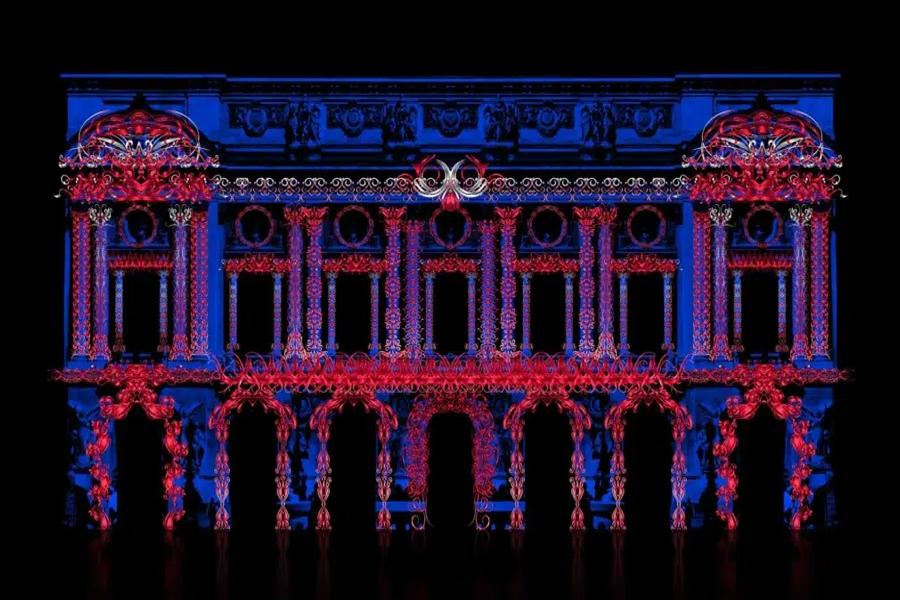
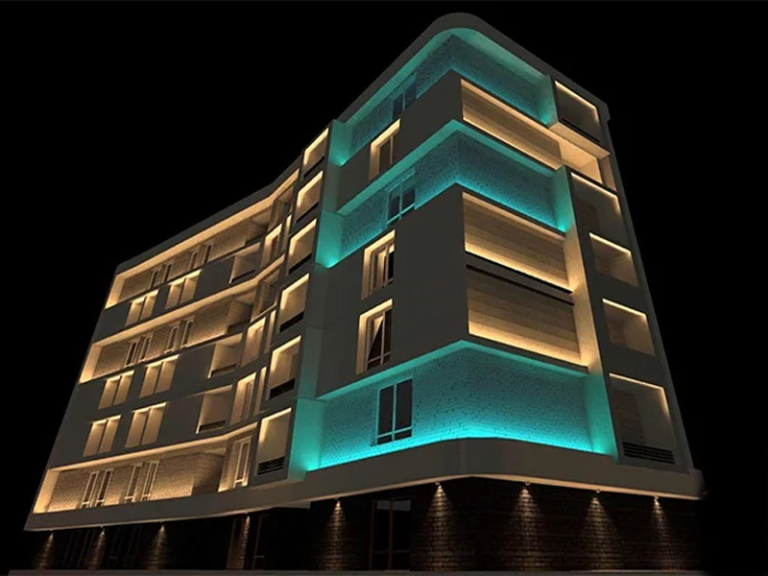
3D building lighting is one of the most modern architectural lighting techniques, designed to create depth, volume, and dimension on a building’s facade. In this approach, light is not used merely to illuminate space; rather, it acts as a design element, highlighting architectural forms and making facade details appear completely different at night.
The intelligent use of light and shadow in this type of lighting transforms a flat and uniform facade into a vibrant and dynamic visual experience. In 3D lighting, the angle of light, brightness intensity, and fixture placement are selected with extreme precision.
This meticulous planning ensures that elements such as columns, horizontal and vertical lines, recesses, and projections are emphasized. Unlike simple lighting that usually only illuminates the surface, this method focuses on showcasing the spatial structure of the building.
One of the key features of 3D building lighting is its full harmony with architectural style. Whether the building has a modern or classical facade, this lighting can be designed and implemented in accordance with the form and material of the facade. For this reason, it is now widely used in residential, commercial, and office projects.
Functionally, 3D lighting not only enhances visual appeal but also improves the building’s visibility at night, increases facade readability, and even strengthens the visual identity of a project. These advantages have made it one of the main trends in contemporary architectural facade lighting.
Advantages of 3D Building Lighting
3D building lighting offers numerous benefits, making it a smart choice for building facades. The most significant advantage is the creation of visual depth and dimension. When used correctly, light transforms uniform architectural forms into dynamic and eye catching structures. This is particularly important for buildings with unique designs or modern facades.
Another major advantage is the increased nighttime appeal of the building. Many buildings look attractive during the day but appear lifeless at night. 3D lighting ensures that the building maintains a strong visual identity even after dark, becoming a prominent element in its surroundings.
From an economic perspective, properly executed 3D lighting can increase property value. A beautiful and professional facade directly influences public perception, which is especially important for commercial and office buildings. Additionally, using modern equipment such as energy efficient lights reduces long term energy consumption and maintenance costs.
Another benefit of 3D building lighting is its high design flexibility. Lighting designers can create various lighting scenarios based on facade materials, colors, and overall building structure. This flexibility ensures that each project achieves a unique result, distinguishing it from similar buildings.
Ultimately, this type of lighting enhances facade readability, emphasizes architectural details, and provides a superior visual experience, contributing significantly to the quality of urban spaces.
Applications of 3D Building Lighting
3D lighting has wide ranging applications in building facades, making it popular in many architectural projects. One of the most important applications is emphasizing key facade elements. Areas such as columns, frames, vertical and horizontal lines, or protruding volumes can be highlighted with targeted lighting, creating a completely distinct visual effect that captures attention.
In commercial buildings, 3D lighting plays a crucial role in attracting attention. A professionally illuminated facade at night conveys trust, quality, and credibility. This is why many retail stores, shopping centers, and office buildings use this method to strengthen their visual identity.
In residential projects, this type of lighting is also widely used. By creating a sense of depth and order on the facade, the building appears more luxurious and cohesive. Additionally, 3D lighting can help differentiate floors or sections of the facade, improving overall readability.
Another important application of 3D lighting is for urban spaces and iconic buildings. Structures recognized as city landmarks can maintain their identity at night and become visual focal points in their surroundings.
Finally, besides its aesthetic benefits, 3D lighting also serves functional purposes: enhancing nighttime visibility, guiding visual flow, and creating a sense of security are among its key contributions to building facades.
Difference Between 3D Building Lighting and Conventional Lighting
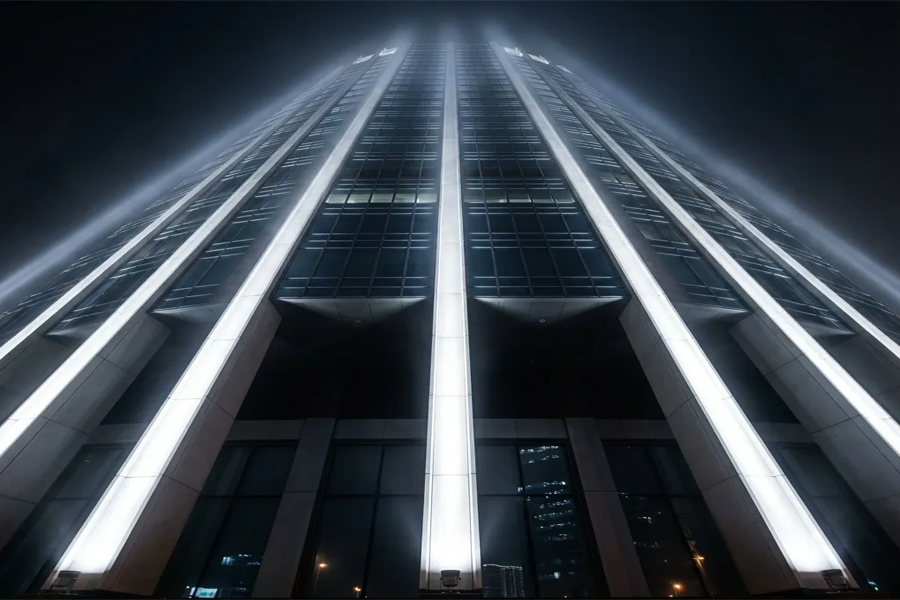
The main difference between 3D building lighting and conventional lighting lies in the purpose and use of light. In conventional lighting, the primary focus is on illuminating the facade surface or providing general lighting, whereas in 3D lighting, light is used as a design tool to highlight architectural volumes and forms.
In conventional lighting, fixtures are often installed uniformly, resulting in a flat facade without depth. In contrast, 3D lighting carefully adjusts the light angle, intensity, and fixture spacing to create targeted highlights and shadows, emphasizing architectural details. This difference makes the facade appear more lively and dynamic.
From a design perspective, 3D lighting requires a detailed study of the facade structure and materials. Unlike conventional lighting, which is often implemented without a specific plan, 3D lighting is executed according to a pre designed lighting scenario.
This approach significantly enhances the final quality of the work. Another difference is in visual impact. 3D building lighting gives the facade identity and character, whereas conventional lighting is primarily functional.
This distinction is particularly noticeable in modern buildings and landmark projects. Ultimately, although 3D lighting may seem more complex at first glance, its outcome is a distinctive, professional, and lasting facade that significantly enhances the architectural value of the building.
Methods for Implementing 3D Building Lighting
Implementing 3D building lighting requires precise planning and selecting the appropriate method based on the architectural form of the facade. One of the most common techniques is linear lighting, which emphasizes the building’s horizontal and vertical lines. This method is particularly effective for modern facades, making the overall structure appear more organized and deeper.
Another method is volumetric lighting, where light is adjusted to highlight protruding or recessed volumes of the facade. By creating controlled shadows, this technique adds dimension and enhances the three dimensional perception of the building. Proper use of this method requires careful knowledge of fixture placement and light angles.
In many projects, combining multiple methods produces the best results. For example, linear lighting can be combined with accent lighting to highlight both the main lines of the facade and architectural details. This combination enhances visual appeal and prevents monotony.
An important aspect of implementing 3D lighting is selecting suitable equipment. Fixtures with adjustable intensity and beam angles provide greater control over the lighting design. Additionally, considering the durability of equipment against environmental conditions plays a crucial role in the longevity and quality of the project. Ultimately, proper implementation should follow a well defined lighting scenario to achieve a cohesive, professional, and lasting result.
Designing 3D Building Lighting
Designing 3D building lighting is a specialized process conducted prior to project implementation and plays a decisive role in the final quality. In the first stage, the architectural structure of the facade is thoroughly analyzed. The building’s overall form, materials, and key elements all influence design decisions.
Next, the lighting designer determines which parts of the facade should be highlighted and which areas should remain in the background. This prioritization ensures that visual focus is correctly guided, giving the facade a more cohesive appearance. Choices regarding light type, color, and intensity are also made at this stage.
One of the main principles in design is balancing light and shadow. Over illumination can eliminate depth, whereas controlled lighting enhances the three dimensional effect. Therefore, the design must ensure that light and darkness work in perfect harmony.
During the design process, lighting simulations are often used to visualize the final outcome before implementation. This helps identify and correct potential errors. Ultimately, a precise and well planned design simplifies execution and produces a professional and impressive result.
3D Building Facade Lighting with LEDs
Using LEDs in 3D building lighting has become one of the most popular choices due to their technical features and high flexibility. LED fixtures allow precise control over light intensity and beam angle, which helps accurately highlight architectural details. These lights are particularly effective for creating linear effects, emphasizing volumes, and distinguishing different sections of the facade.
One of the main advantages of LEDs is their low energy consumption. This is especially important for projects where lighting is active for extended hours at night. In addition to reducing electricity costs, the long lifespan of LEDs minimizes maintenance and replacement needs.
In terms of design, LEDs offer high versatility and can be used in linear, spot, or wall washer configurations. This variety allows designers to create lighting scenarios tailored to the building’s form. For instance, linear LED lights can emphasize architectural lines in modern facades, while softer lighting can be applied in classical designs.
When implementing 3D building lighting with LEDs, light color selection is crucial. White, warm white, or a combination of both can directly affect the visual perception of the facade. Additionally, the quality of the LED chips and the fixture’s protection rating against environmental conditions play an important role in project durability. Overall, LEDs are one of the best options for 3D building lighting due to their efficiency, versatility, and compatibility with modern design.
Key Points in 3D Building Lighting
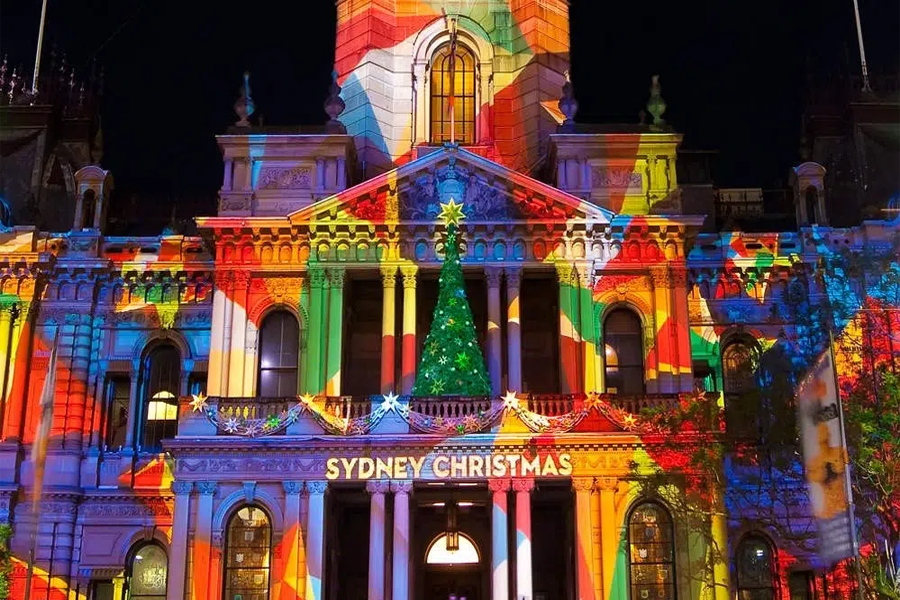
To achieve successful 3D building lighting, several key considerations must be observed. The first point is full coordination between the lighting design and the building’s architecture. Light should serve the form and structure of the facade, rather than overshadow it. Incorrect placement of fixtures can diminish the three dimensional effect and create visual confusion.
Light intensity is another critical factor. Excessive lighting can cause visual discomfort and flatten the facade, while insufficient lighting fails to properly showcase architectural details. Achieving a balance between light and shadow is a fundamental principle of 3D lighting.
The choice of light color must also be made carefully. Overly intense or mismatched colors can make the facade appear unnatural. Generally, neutral or warm colors provide a more professional and lasting appearance. In some specialized projects, limited and targeted color combinations can be used.
Environmental conditions such as humidity, dust, and temperature variations must also be considered in 3D building lighting. Using high quality, durable equipment prevents future technical issues, and proper access for maintenance should be planned from the start. Ultimately, having a precise lighting plan implemented by skilled professionals is the most important factor in achieving a distinctive and professional result.
Impact of 3D Building Lighting on Facade Aesthetics
3D lighting has a direct impact on the beauty and visual appeal of a building’s facade, transforming an ordinary structure into a striking landmark. Properly applied, lighting highlights architectural details that are less noticeable during the day, giving the facade character. This ensures the building stands out at any hour of the day or night.
One of the most significant effects of this lighting is creating depth and dimension. Controlled light and shadow make volumes appear more realistic, moving the facade away from a flat appearance. This is particularly important for modern buildings or facades with projections, recesses, and prominent lines.
Proper lighting can also enhance the visual order of the facade. By guiding the viewer’s gaze toward important sections, it prevents visual clutter and chaos. As a result, the building appears more cohesive and professional. This is especially important in urban environments where multiple facades compete for attention.
The impact of 3D lighting is not limited to aesthetics; it also affects the viewer’s perception. Thoughtful lighting can convey a sense of calm, security, and quality, providing a better visual experience for pedestrians and residents. Ultimately, when designed and executed correctly, the visual appeal is lasting, and the facade becomes a recognizable element of the building’s identity.
Cost of 3D Building Lighting
The cost of 3D building lighting depends on multiple factors and cannot be fixed. One of the most important factors is the facade area. Larger facades require more equipment, which increases implementation costs.
The complexity of the lighting design also plays a key role in determining the cost. Simple designs with fewer fixtures are less expensive than complex plans with diverse lighting scenarios. The level of architectural detail emphasized and the use of specialized techniques can also affect the final cost.
Equipment quality is another major factor. Higher quality, longer lasting fixtures usually cost more but reduce maintenance expenses over time. Choosing the right equipment balances quality and cost, which is essential for professional projects.
Other considerations include environmental conditions and the project site. Difficult access to the facade, building height, and the need for special installation equipment can increase costs. Additionally, the expertise and experience of the implementation team impact the final price. Overall, 3D building lighting is a long term investment, justified by the enhanced beauty, value, and identity it provides to the building.
Common Mistakes in 3D Building Lighting
Several common mistakes can significantly reduce the quality of 3D building lighting. One major mistake is excessive lighting. There is a misconception that more light always makes a facade more attractive, but over lighting eliminates depth, causes glare, and diminishes the three dimensional effect.
Another frequent error is ignoring the building’s architecture. Lighting that disregards the form, materials, and details of the facade produces a disjointed and unprofessional result. Light should complement the architecture, not act independently. Incorrect fixture placement can also create unwanted shadows and visual disorder.
Using low quality equipment is another common mistake. Inferior fixtures not only have a short lifespan but also produce poor quality light, which diminishes the facade’s appeal and increases maintenance costs over time.
In many projects, the absence of a clear lighting plan is evident. Implementing lighting without a defined scenario leads to inconsistent and uncoordinated results. In 3D building lighting, careful planning and precise design are essential to avoid these mistakes. Finally, neglecting environmental factors such as humidity, dust, and temperature fluctuations can disrupt equipment performance. Considering these factors from the start prevents technical issues in the future.
Conclusion
3D building lighting is one of the most effective methods to enhance the beauty, depth, and visual identity of a building’s facade. By highlighting architectural forms and details, it gives the building a unique and professional appearance at night.
Proper design, selecting suitable equipment, and precise execution play a vital role in the final quality. By avoiding common mistakes and entrusting the project to skilled professionals, a lasting, cohesive, and visually striking facade can be achieved one that not only enhances beauty but also increases the value and appeal of the building.