
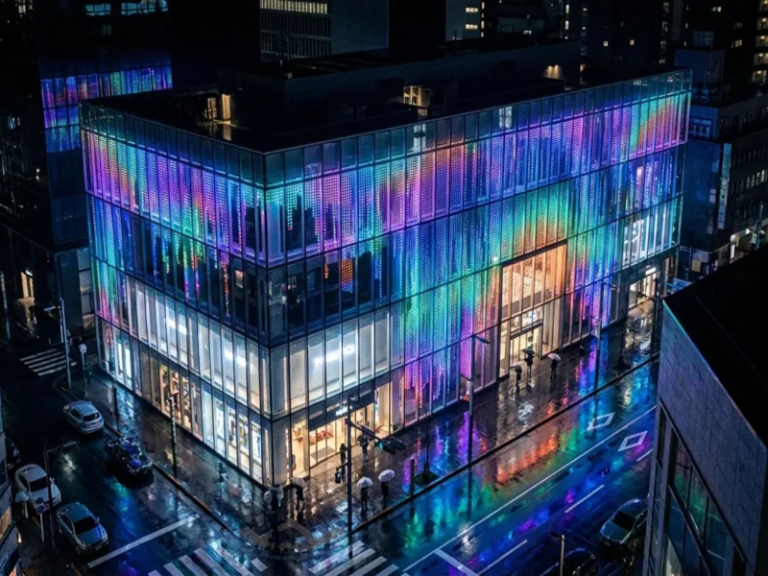
Smart facade lighting with SMD panels refers to the use of advanced LED technology to illuminate building facades. SMD panels, or Surface Mounted Device LEDs, are a type of LED light that is mounted directly onto a circuit board. They offer high luminous efficiency while consuming low energy.
This type of lighting allows architects and designers to create a wide range of lighting effects and highlight the appearance of buildings at night, making them more striking and visually appealing. Smart lighting systems make it possible to adjust brightness and color based on environmental conditions, time of night, or special occasions.
For example, soft and warm lighting can be set for a calm nighttime atmosphere, while bright and colorful lighting can be activated for events and special ceremonies. These capabilities ensure that facade lighting is not merely decorative, but also efficient and functional. One of the key features of this method is the easy installation and modular design of SMD panels.
Unlike traditional systems that require complex wiring and bulky equipment, SMD panels are compact and lightweight, making installation faster and more cost effective. In addition, their high resistance to moisture and heat ensures reliable performance in outdoor building environments.
Overall, using this technology not only enhances the visual appeal of a building but also improves energy efficiency and extends the lifespan of lighting equipment. The combination of smart systems with SMD panels provides a modern, customizable lighting experience that significantly enhances the building’s nighttime appearance. This is what makes SMD facade lighting an ideal choice for modern buildings.
Advantages of SMD Facade Lighting
SMD facade lighting offers numerous advantages that make it a popular option for modern buildings. The first and most important benefit is low energy consumption. Thanks to their optimized design and high light output, SMD panels provide strong illumination while using less electricity, resulting in reduced energy costs and long term savings.
Another major advantage is their long lifespan. Compared to traditional lamps, SMD lights wear out more slowly and require less frequent replacement, which reduces maintenance and repair costs. Additionally, flexibility in lighting design is a standout feature of this system. By using different types of fixtures, designers can create uniform or accent lighting and develop diverse visual effects for facades.
Smart facade lighting systems also allow control over color, brightness, and operating time. This adaptability enables lighting to respond to environmental conditions and creates a dynamic and engaging visual experience for viewers. Moreover, installation and commissioning of SMD lights are simple and fast especially in large scale projects where traditional equipment would be time consuming and costly.
Considering these factors, this technology not only enhances a building’s appearance but also reduces energy consumption and increases equipment lifespan. As a result, SMD facade lighting is a smart investment for architectural lighting projects.
Best SMD Lights for Smart Facade Lighting
Choosing the right SMD lights for smart facade lighting plays a crucial role in the quality of illumination and the building’s overall appearance. These lights are available in various power levels, colors, and sizes, and the appropriate choice depends on the project’s goals and facade design. For instance, large facades require high output lights with wide light distribution, while architectural details and facade lines are better highlighted using smaller, lower intensity fixtures.
One key factor in selecting lights is color temperature and the Color Rendering Index (CRI). High CRI lights ensure that facade materials and architectural details appear natural and attractive, accurately showcasing the building’s design. Resistance to moisture and dust is also essential for outdoor applications to maintain longterm, stable performance.
Smart lighting systems require adjustable fixtures so that brightness and color can be easily modified. This feature enables the creation of different lighting scenarios for various times of day or special occasions, offering a dynamic and engaging lighting experience.
Ultimately, selecting the right SMD lights not only guarantees lighting quality but also reduces energy consumption and extends equipment lifespan, making the lighting project more efficient and cost effective. High quality equipment ensures a professional, modern look and delivers an appealing visual experience for viewers.
Smart Facade Lighting with SMD
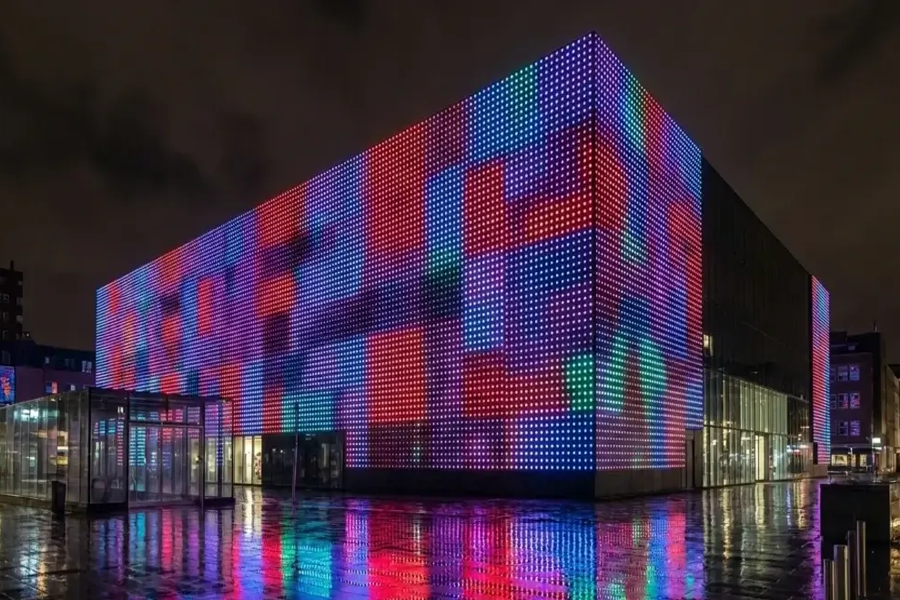
Smart facade lighting with SMD is a modern approach that enhances aesthetics while reducing energy consumption. Due to their high efficiency, SMD panels produce more light with less power usage, helping lower energy costs and creating an optimized, economical lighting system.
The use of smart control systems allows precise adjustment of light intensity and color. This enables lighting to operate at reduced levels during low traffic hours or specific conditions, consuming energy only when needed. For example, light intensity can be lowered during quiet nights or at dusk, and fully activated during events or special occasions.
Another advantage of this system is the low heat generation of SMD panels. Traditional lamps convert much of their energy into heat, whereas SMD technology minimizes this issue by converting most energy into light. Additionally, motion sensors or ambient light sensors ensure that lighting is activated only where necessary, minimizing energy waste.
With these capabilities, smart facade lighting not only delivers an attractive visual experience but also significantly reduces energy consumption and operational costs. This method offers designers a balanced combination of efficiency and aesthetics, making SMD facade lighting both modern and economical.
Difference Between SMD Facade Lighting and Conventional LED Lighting
SMD facade lighting and conventional LED lighting differ significantly in terms of technology and performance. SMD panels feature a compact, surface mounted design that enables uniform, high intensity light output. In contrast, conventional LEDs often deliver lower light output with less uniform distribution. This difference allows SMD lighting to create a more natural, refined, and professional appearance for building facades.
Another key difference lies in energy consumption. High efficiency SMD lights produce greater brightness while using less electricity, whereas standard LEDs typically require more power to achieve similar illumination levels. SMD panels also offer a longer lifespan and higher resistance to heat and moisture, making them easier to maintain over time.
Design flexibility is another major advantage of SMD panels. By combining different colors, beam angles, and brightness levels, designers can create diverse lighting effects. Traditional LED systems offer more limited options in this regard. Moreover, smart lighting systems integrate seamlessly with SMD panels, enabling dynamic adjustment of color and brightness.
Overall, choosing SMD panels over conventional LEDs provides a more modern, cost effective, and visually appealing lighting solution, enhancing the building’s nighttime presence. These features make SMD facade lighting an ideal choice for architects and lighting designers.
Creative Facade Design with SMD Lighting
One of the greatest advantages of SMD lighting is the ability to create creative and distinctive facade designs. Thanks to their flexibility in size, color, and beam angle, SMD panels allow designers to produce diverse and captivating visual effects. This is especially valuable in modern buildings and innovative architectural projects, where lighting can highlight architectural details and draw attention.
With smart technology, light intensity, color, and operating time can be precisely controlled. This allows lighting to adapt to seasons, special occasions, or different hours of the night, keeping the facade dynamic and visually engaging. In addition, combining multiple colors and localized lighting effects makes it possible to emphasize lines, volumes, and textures in a creative way.
The modular design and installation flexibility of SMD panels also make it easier to adapt lighting to various facade types. Even complex projects with intricate details can be effectively illuminated using precise, controlled lighting. This approach not only enhances the building’s appearance but also delivers a professional and distinctive visual experience.
As a result, SMD facade lighting becomes more than just illumination it transforms into a creative tool for shaping modern visual experiences. This capability is highly valuable for architects and lighting designers.
Easy Installation of SMD Facade Lighting
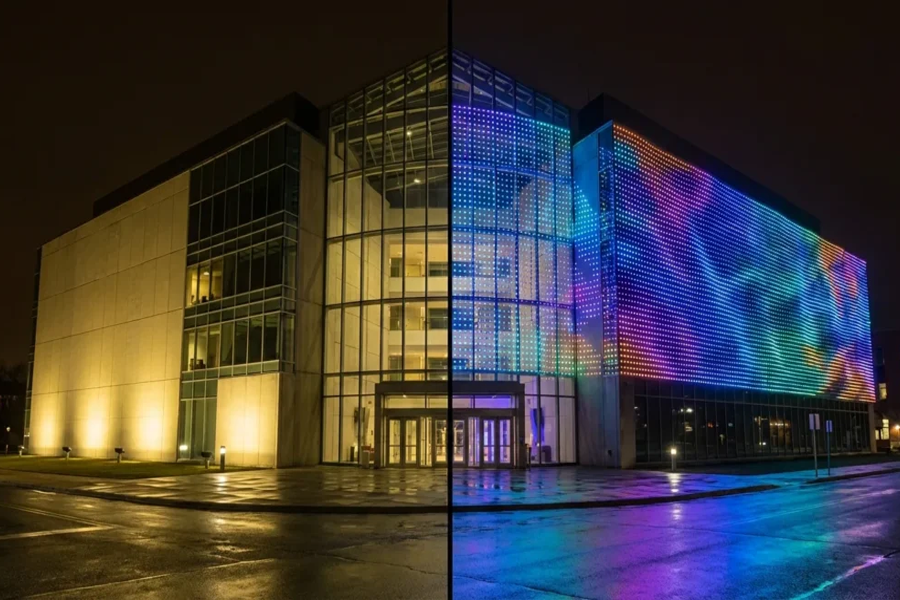
One of the main reasons for the popularity of SMD panels in facade lighting is their ease of installation. Their lightweight, modular design allows for fast installation without the need for complex equipment. Unlike traditional systems that require extensive wiring and large mounting structures, SMD panels can be easily installed on facades with adjustable beam angles.
Additionally, their high resistance to moisture, heat, and dust ensures stable long term performance and reduces the need for frequent maintenance. This is especially important for large urban projects and residential or commercial buildings, where both execution time and costs must be minimized.
Smart lighting systems are also easy to install and integrate smoothly with SMD panels. This compatibility enables simple control of brightness and color without added complexity, delivering a professional and efficient lighting experience. Different lighting scenarios for events or time based changes can be implemented without modifying physical equipment.
Ultimately, the easy installation and flexibility of SMD panels make them a practical and economical choice for both small and large projects. With this approach, SMD facade lighting provides not only a modern and attractive appearance but also a cost effective and low maintenance solution.
Appropriate Light Color and Color Temperature for SMD Facade Lighting
Selecting the right light color and color temperature is a key factor in successful SMD facade lighting, as it strongly influences the building’s appearance and the viewer’s perception. Light temperature generally falls into warm, neutral, and cool categories, each creating a different visual effect. Warm light conveys comfort and calmness, making it suitable for residential facades and tranquil nighttime environments, while cool light delivers a clean, modern look commonly used in commercial and office buildings.
Beyond color temperature, light color itself is equally important. SMD lights can produce white, yellow, and even colored light, allowing designers to create creative and eye catching facade effects. Using complementary colors and combining accent and general lighting ensures architectural details are clearly visible and the building stands out at night.
Smart lighting systems allow designers to adjust color and color temperature according to time or special occasions. This adaptability ensures that facade lighting remains aligned with environmental conditions and audience needs. Choosing the right colors and temperatures results in lighting that is both visually appealing and energy efficient.
Consequently, SMD facade lighting enables the creation of a cohesive, professional, and engaging visual experience, significantly enhancing the building’s nighttime presence.
Cost and Budget Planning for SMD Facade Lighting
One of the most important aspects of implementing SMD facade lighting is proper cost planning and budgeting. Due to their high energy efficiency and long lifespan, SMD panels reduce operational and maintenance costs over time. However, selecting high quality equipment suited to the project is essential for the initial implementation. Accurate budgeting helps ensure that lights, controllers, and accessories are chosen appropriately for the design requirements.
Costs depend on various factors, including facade size, number of fixtures, installation length, smart system requirements, and the chosen color or color temperature. While low quality fixtures may reduce initial expenses, their shorter lifespan and higher maintenance needs can lead to increased long term costs.
Smart lighting systems also represent part of the budget, but this investment enables advanced control, customizable lighting scenarios, and reduced energy consumption. Over time, these benefits help offset initial costs and optimize the overall investment.
In summary, careful planning and proper equipment selection make it possible to control costs while achieving a professional and sustainable lighting project. High quality components and optimized design ensure that SMD facade lighting is not only visually appealing and modern, but also economically sound.
Guide to Choosing SMD Panels for Facade Lighting
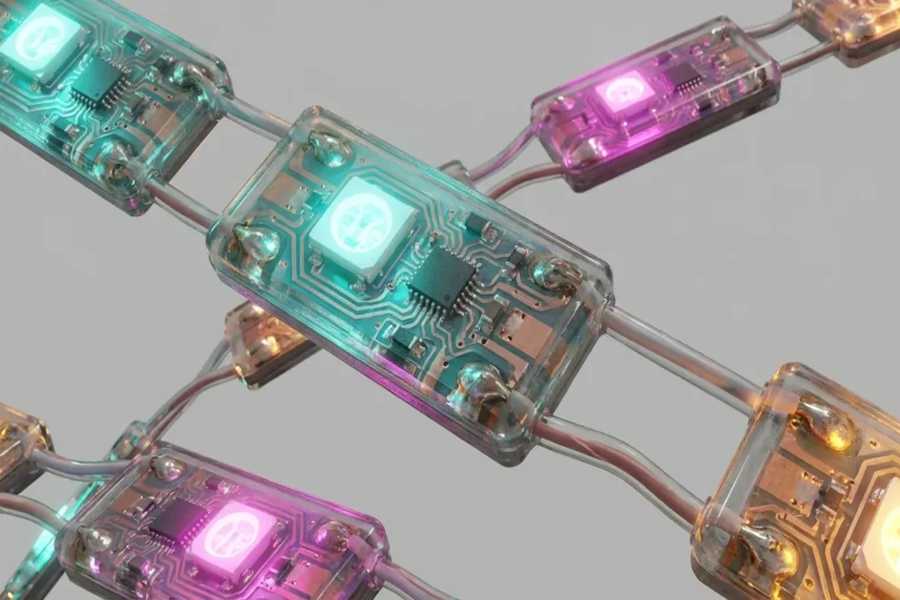
Selecting the right SMD panels for facade lighting requires attention to several key factors that influence light quality and system durability. The first consideration is luminous output. Depending on facade size and required brightness, fixtures with appropriate intensity should be selected to ensure uniform illumination and clear presentation of architectural details.
The Color Rendering Index (CRI) is another critical factor. High CRI lights accurately display material colors and architectural details, while low CRI lighting can appear artificial and less visually appealing. Choosing the correct color and color temperature also ensures harmony with the facade design and enhances overall aesthetics.
Resistance to environmental factors such as moisture, heat, and dust is equally important. Durable models ensure reliable long term performance with minimal maintenance. Compatibility with smart control systems further allows dynamic adjustment of brightness and color, increasing design flexibility.
By considering these factors and selecting high quality equipment, it is possible to create an efficient, attractive, and modern facade lighting system that delivers a compelling visual experience. SMD facade lighting thus achieves an optimal balance between aesthetics and performance.
Conclusion
Facade lighting with SMD panels is a modern and intelligent solution that combines aesthetics, efficiency, and energy savings. Due to their long lifespan, low energy consumption, and design flexibility, SMD panels are an ideal choice for architectural facades.
Smart systems enable precise control of brightness and color, allowing for diverse visual effects. Selecting high quality fixtures, planning an appropriate budget, and paying attention to light color and temperature result in a professional and sustainable outcome. Ultimately, SMD facade lighting not only enhances the building’s appearance but also delivers a modern, efficient nighttime lighting experience.