
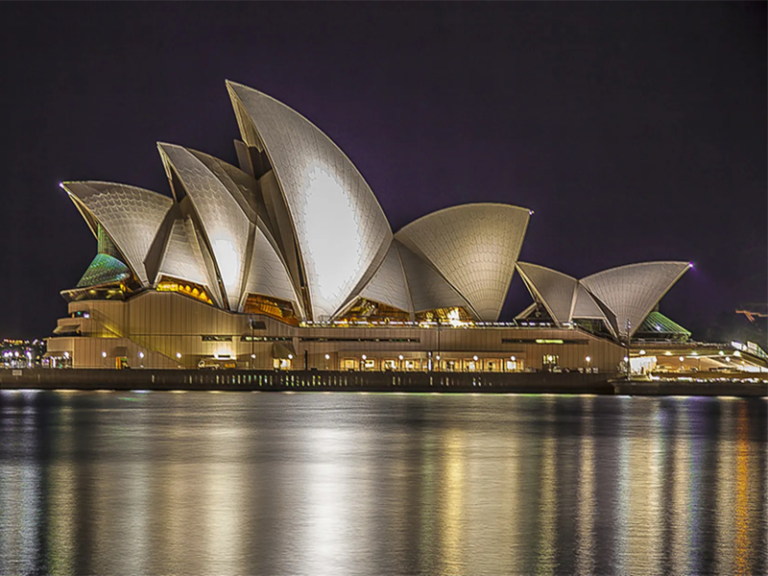
The Vivid Sydney Festival is one of the largest and most renowned cultural, artistic, and lighting events in Australia, attracting millions of visitors from around the world each year. This festival, a creative fusion of light, music, and ideas, transforms the city of Sydney into a vibrant canvas for digital art.
At the heart of this magnificent event stands a historic and iconic building that defines the visual identity of the festival. Undoubtedly, the lighting of the Sydney Opera House is the festival’s main highlight, capturing the attention of photographers, artists, and tourists alike.
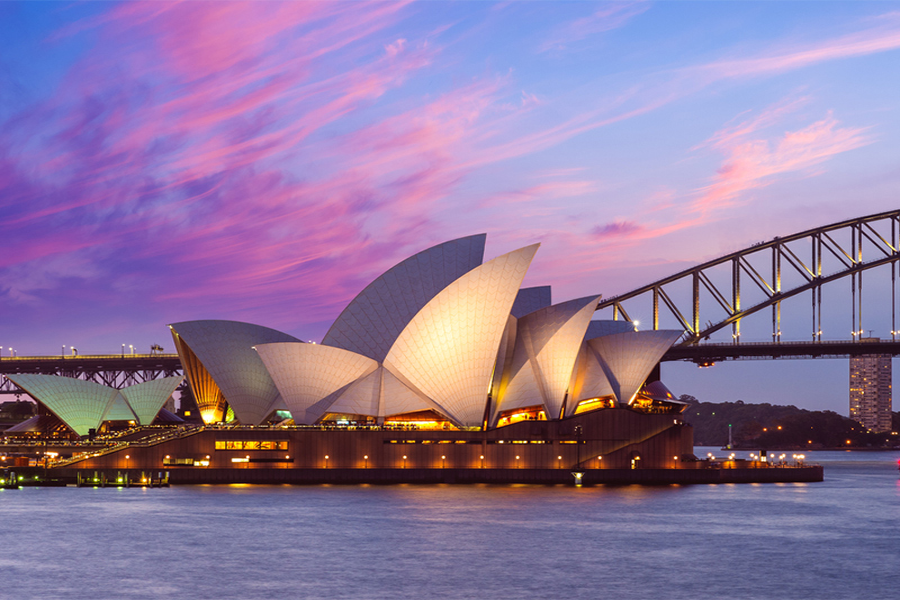
With its unique white sails, the Opera House provides an ideal canvas for light artistry, revealing an entirely different appearance each night. In this event, classical and modern architecture blend with advanced lighting technologies, creating a breathtaking visual experience for audiences.
The festival focuses primarily on using light as a medium to tell stories and convey artistic concepts, with the Sydney Opera House serving as the main canvas for these luminous paintings. The importance of this feature is so significant that many visitors travel to Sydney solely to witness this particular display. In the following sections, we will explore the various aspects of this lighting masterpiece and see how this historic building is reborn through light.
History of Sydney Opera House Lighting in Major Events
Since its opening in 1973, the Sydney Opera House has been recognized as one of the architectural masterpieces of the 20th century, but the use of light to highlight its features has a long history. Before the Vivid Festival began, the building was illuminated for various occasions such as New Year’s Eve and national celebrations, but never with such precision and artistic finesse.
The official use of professional lighting began with the launch of the Vivid Festival in 2009, marking a turning point in the history of Sydney Opera House lighting. That year, lighting designers and artists realized that the building’s sail like shells had great potential for 3D projections and light painting.
Over the years, the festival has witnessed remarkable evolution in techniques and concepts from simple geometric patterns to complex animated narratives that cover the entire building. This event has changed global perceptions of architectural lighting, making the Sydney Opera House a benchmark for historic buildings around the world.
The festival’s history demonstrates how light can breathe new life into a concrete structure, transforming it from a static building into a dynamic, living work of art. This historical perspective is highly instructive for lighting designers, as many modern urban lighting ideas trace their roots back to these events.
Techniques Used in Sydney Opera House Lighting
Creating stunning visuals on the complex surfaces of the Sydney Opera House requires more than conventional lighting techniques; engineers and artists employ advanced, hybrid methods. One of the main techniques used is 3D projection mapping, allowing designers to precisely calculate the angles and curves of the sails to project images that appear to be part of the building itself.
In this method, light is carefully focused on each of the thousands of ceramic tiles covering the sails, altering the perception of depth and texture. In addition to powerful projections, colored lasers and precise light beams are used to create bright outlines in the night sky and around the building, enhancing the Opera House’s visual appeal.
Another technique involves dynamic and moving lights, synchronized with music to convey a sense of life and movement. Controlling the intensity and color of the lights is crucial: soft, soothing tones are used at certain moments, while bold, energetic colors create excitement at others.
Coordinating these techniques requires meticulous planning and advanced simulation software to ensure that the final display looks beautiful and coherent from all viewpoints, including distant rooftops and city perspectives. The use of these technologies demonstrates how traditional architecture and digital art can merge to create works beyond imagination.
Challenges of Lighting the Opera House Sails
Executing a lighting project on this scale and with such high quality inevitably comes with significant technical and engineering challenges. One of the biggest obstacles in lighting the Sydney Opera House is the extremely complex and non linear geometry of its roof shells, which consist of thousands of precast concrete and ceramic segments.
These steep, repetitive curves make the installation of lighting equipment and precise adjustment of angles one of the most challenging lighting engineering tasks in the world. Another major challenge is unintended light reflection; the smooth, white surface of the tiles can act like a mirror, scattering light in unwanted directions, which can lead to light pollution or reduce image quality.
To address this issue, designers must carefully calculate the type of projector lenses and the angle of projection so that light lands exactly where intended. Additionally, placing heavy and bulky projectors outdoors, exposed to strong sea winds and humidity, requires extremely sturdy and safe mounting structures.
Environmental restrictions and the need to minimize energy consumption present further challenges, which are managed through the use of energy efficient LED lamps and smart control systems. Preserving the building’s appearance and avoiding damage to historic materials during installation and dismantling is also carefully observed, ensuring that this architectural masterpiece remains intact for future generations.
The Role of Colors and Music in Sydney Opera House Lighting
One of the distinguishing features of the Vivid Festival is the precise and artistic coordination of light and sound, creating a multi sensory experience for viewers. The lighting of the Sydney Opera House is not merely a static visual display; it functions like a grand orchestra, where every note is accompanied by changes in color and light intensity.
The psychology of colors plays a crucial role in this display. For example, shades of blue and purple can evoke a sense of calm and mystery, while red and orange convey excitement and energy. Designers skillfully use these psychological effects to better tell the stories behind each piece of artwork.
Meanwhile, music acts as a bridge between the visuals and the audience. Fast, driving rhythms are often paired with rapid light changes and sudden flashes, while calm melodies correspond with gradual and soft color transitions. This synchronization makes viewers feel as if the building is breathing and moving with the music.
Selecting an appropriate color palette is also challenging, as the colors must contrast against the dark night sky while covering the white surface of the building. This intelligent combination of light and sound leaves a lasting visual impression, turning the festival experience into a memorable event.

Best Time to See the Sydney Opera House Lighting
For those planning to experience this artistic masterpiece, choosing the right time can significantly impact the quality of the experience and photography. The Vivid Festival usually takes place during the winter months of May and June, when nights are longer and provide more opportunity to enjoy the light displays.
The optimal time to view the Opera House lighting is about one hour after sunset, when the sky is fully dark and the contrast between the lights and the background is at its peak. At this time, colors appear more vivid and brilliant, and the details of the projections are easier to see.
However, this is also the peak crowd period. For a quieter experience, later hours or early sessions may be preferable. Choosing weekdays instead of weekends can also help avoid large crowds and offer better angles for photography.
Weather conditions are another important factor. Clear, cloudless nights enhance reflections of the lights on the harbor and sky. It is recommended to check the festival’s detailed schedule in advance, as some special displays with unique themes are shown at specific times, making it worth waiting in line. Proper planning ensures that you enjoy the festival to its fullest.
Tools and Equipment Required for the Project
Executing a massive lighting project on the scale of the Sydney Opera House requires the use of the most advanced lighting equipment and cutting edge technologies. The heart of these displays is high powered, high resolution projectors, capable of projecting vivid images onto the building’s curved surfaces.
For the Sydney Opera House lighting project, laser and LED projectors with extremely high output are commonly used to provide sufficient brightness to overcome ambient light and create sharp, clear images. In addition to primary light sources, light bars and moving colored lights are employed to produce side effects and illuminate the surrounding environment, adding depth to the visual presentation.
Another essential component is high performance media servers, which process and deliver high quality video content. These servers must handle multiple video layers simultaneously without lag or stuttering and send them seamlessly to the projectors. Additionally, DMX control systems are crucial for precise management of individual lights and their synchronization.
On the software side, specialized mapping programs and 3D simulation tools are used to accurately predict how light will fall on the building’s complex surfaces. All equipment must also withstand the region’s challenging weather conditions, including high humidity and salty sea winds, ensuring stable performance throughout the festival.
Difference Between Architectural Lighting and Festival Lighting
The difference between permanent architectural lighting and temporary festival lighting lies in their purpose and execution. Architectural lighting of the Opera House, visible year round, is designed to highlight the building’s form, structure, and enduring identity. This type of lighting is typically static, uses soft, natural colors, and aims to showcase the beauty of the building while respecting the original architectural design.
In contrast, the Sydney Opera House lighting during the Vivid Festival is transformative and artistic. Here, light is used as a tool to alter the building’s visual identity, sometimes masking the structure behind layers of color and abstract imagery. Festival lighting is dynamic, animated, and narrative driven, seeking emotional engagement with the audience, while architectural lighting remains more functional and aesthetically consistent.
Technically, festival lighting requires heavy, temporary, high powered equipment installed for a short period, whereas permanent architectural lighting uses energy efficient, long lasting fixtures that require minimal maintenance. Essentially, the festival allows architecture to merge with digital arts, blurring the lines between reality and imagination, while architectural lighting remains faithful to the building’s physical form.

The Role of Digital Art in Creating the Opera House Lighting
In recent years, digital art has become a central component of lighting design, and in a project as grand as the Sydney Opera House lighting, this role is more prominent than ever. Gone are the days when lighting merely meant illuminating parts of a building.
Today, digital artists use 3D graphics and animation software to create creative works projected directly onto the building’s sails. This process, known as projection mapping, requires a deep understanding of the building’s geometry and high visual creativity.
Artists design complex patterns, abstract shapes, and even narrative stories, transforming the Opera House into a massive canvas that presents a new artwork each night. Emerging technologies such as augmented reality and artificial intelligence now allow designers to create more complex interactions between light and the surrounding environment.
In this process, the boundary between physical architecture and virtual art disappears, immersing viewers in a space where reality and imagination intertwine. Digital art also enables customized displays, allowing specific cultural and social messages to be conveyed to a global audience through animated visuals. This modern approach has made the Vivid Festival not just an entertainment event but a leading open air gallery in the world of digital arts.
Conclusion
In this article, we explored various aspects of one of the world’s most stunning facade lighting events and saw how the Sydney Opera House lighting can breathe new life into a historic building. From advanced projection mapping techniques and technical challenges on concrete surfaces to the psychological impact of colors and synchronization with music, every element highlights the complexity and beauty of this art form.
The Vivid Sydney Festival teaches us that light is not merely a tool for seeing in darkness, but a powerful medium for artistic expression, storytelling, and evoking emotions. The contrast between permanent architectural lighting and dynamic festival lighting introduces us to two distinct yet complementary approaches in the world of illumination, each with its unique applications.
For designers and lighting enthusiasts, studying and analyzing such projects offers a rich source of ideas and inspiration, applicable in urban and interior lighting projects. Ultimately, this lighting masterpiece is a testament to the power of technology serving art and architecture, demonstrating that with creativity and innovation, cityscapes can be transformed and magical moments created for residents and visitors alike.