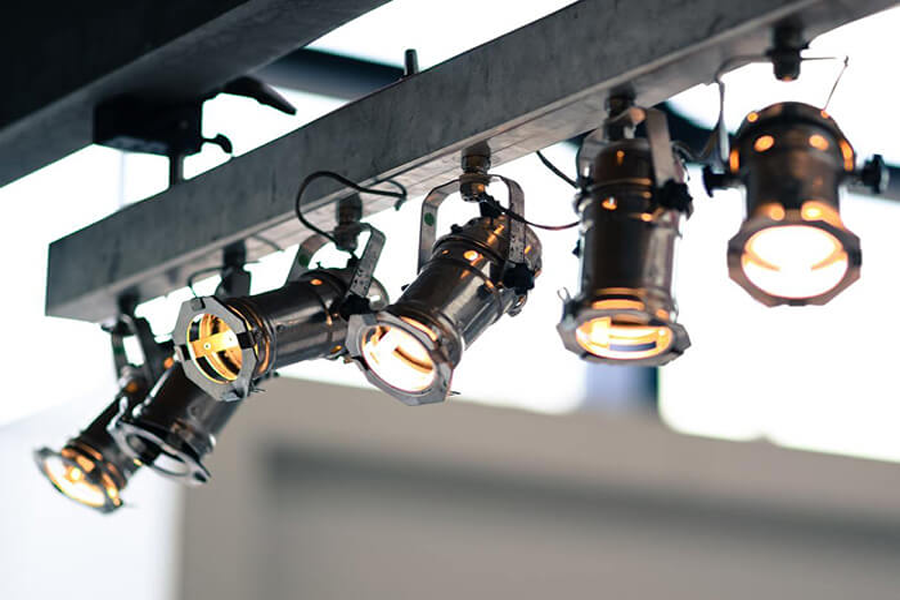
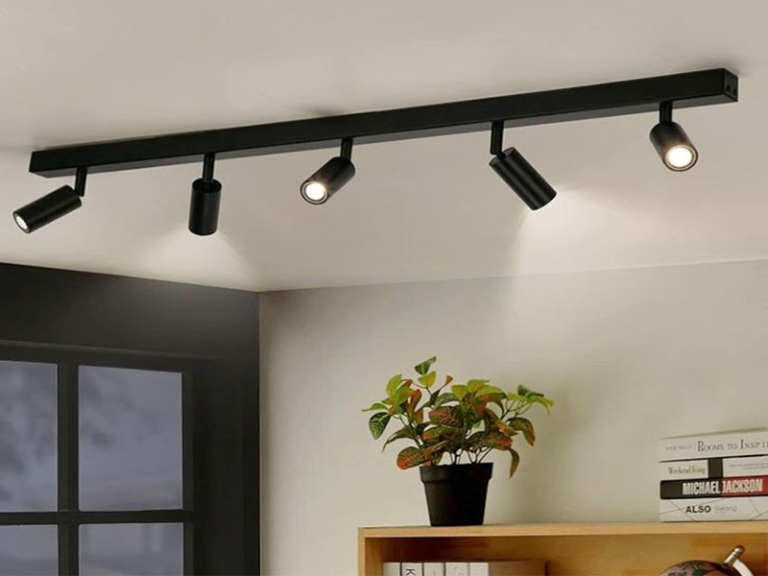
Track lighting is one of the most modern lighting systems, where fixtures are mounted on a powered track and can be repositioned and angled as needed. In this system, the power supply is delivered through the track, allowing each light to be placed anywhere along its path.
This flexibility has made track lighting highly popular in residential, commercial, and gallery spaces. Simply put, track lighting means using a linear path to install multiple adjustable lights, enabling changes in both position and direction of illumination.
This feature allows users to focus light on a wall, product, artwork, or specific area within a space. For this reason, in modern interior design, track lighting is recognized as a versatile and practical solution. One of the main advantages of this system is its customization potential.
You can increase or decrease the number of fixtures, adjust the light angle, and even change the type of fixture without altering the main wiring. This reduces the cost of redesigning lighting in future projects.
Aesthetically, track lighting also creates a minimal and modern appearance. Tracks are usually available in black, white, or gray and easily complement various architectural styles. This makes them suitable for industrial, modern, and even contemporary classic spaces.
If you are looking for a system that offers both high flexibility and a professional look, track lighting can be a key option in your lighting design.
Components of a Track Lighting System
To implement this system correctly, understanding its components is essential. Every successful project begins with the proper and coordinated selection of parts. A track lighting system consists of several main components, each playing a crucial role in overall performance.
The first component is the power track. Typically made of aluminum, it contains copper conductors that transmit electricity. The track can be mounted on the surface or suspended and is available in various lengths. Choosing the appropriate track length should be based on the dimensions of the space and the lighting design.
The second component is the track fixtures. These fixtures have a special adapter that connects to the track, allowing easy repositioning. Fixtures are available in spotlight, linear, or pendant designs, each serving different purposes.
The third important component is the power supply or electrical connection. In single phase systems, mains electricity usually enters the track directly, while some projects use control equipment to manage circuits. Advanced models also allow separate control of lighting groups.
Connectors and adapters are another part of the system. These components connect multiple tracks at various angles, enabling designers to create linear or segmented layouts. Understanding these components ensures error free installation and stable, safe lighting performance over time.
Types of Track Lighting Based on Track Type
Selecting the track type is critical in designing a lighting system, as its technical structure determines how many circuits can be controlled and the level of flexibility in the project. In professional track lighting installations, three types of tracks are most common: single phase, three phase, and magnetic.
Single phase tracks are the most common option for residential and small scale projects. In this system, all fixtures are on a single circuit and turn on or off simultaneously. Its simple installation and lower cost make it suitable for homes, small offices, and limited spaces.
Three phase tracks are more common in stores, galleries, and large commercial spaces. This system has three separate circuits within one track, allowing fixtures to be controlled in different groups. This feature enables designers to illuminate different areas independently and create diverse lighting scenarios.
Magnetic tracks, a newer type, are mainly used in modern and luxury projects. In this system, fixtures attach to the track using magnets, making repositioning very easy. The minimal and sleek design of these tracks has made them popular in contemporary architecture.
Choosing the right track type should consider the space size, intended use, and lighting control needs. For projects requiring precise lighting separation, three phase tracks are a logical choice, while single phase tracks are sufficient for simpler spaces.
Types of Track Lighting Fixtures
In professional lighting design, selecting the right type of fixture plays a crucial role in the quality of the final illumination. Each project, depending on the space’s function, ceiling height, architectural style, and lighting goals, requires specific types of fixtures. Track lighting systems offer the advantage of installing different types of fixtures on a single track and repositioning or combining them as needed.
This flexibility has made track lighting widely used in residential, retail, and office spaces. Below, we introduce the main types of track lighting fixtures and their applications.
Track Spotlights
Track spotlights are the most common fixtures in lighting projects. They feature focused lenses that direct light to a specific point, with beam angles typically ranging from 15° to 60°. This makes them ideal for accent lighting. Spotlights are commonly used in stores to highlight products, in galleries to illuminate artwork, and in homes to emphasize decorative walls or paintings.
A key feature of track spotlights is their adjustable angle and rotation. Designers can change the light direction even after installation without altering the wiring. This flexibility is especially valuable in commercial projects where layouts are frequently updated.
From a technical perspective, selecting the appropriate power and color rendering index (CRI) is essential. In retail environments, fixtures with a high CRI are preferred to display products more naturally. When focusing light and creating contrast is desired, track spotlights are the optimal choice.
Linear Track Lights
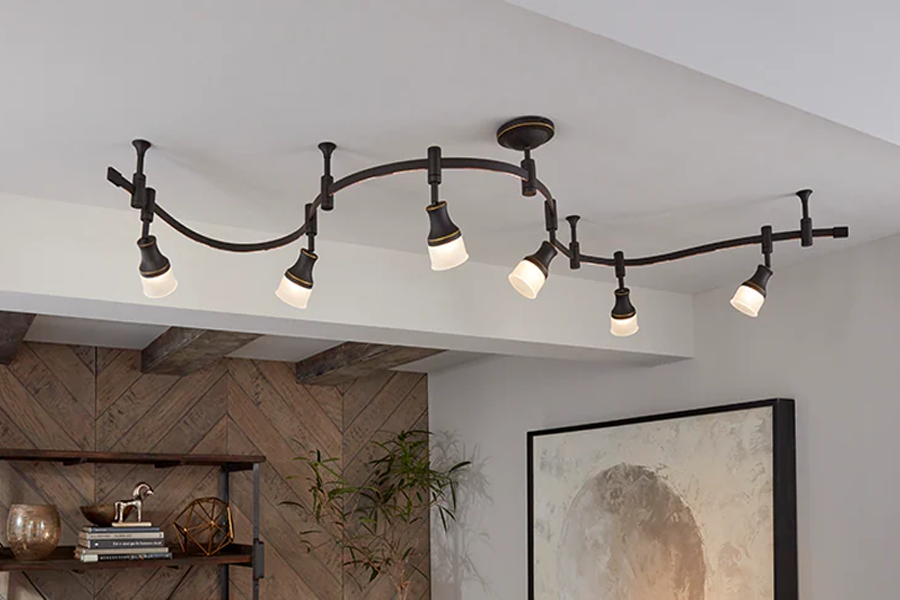
Linear track lights are designed to provide even and broad illumination. Unlike spotlights, which produce concentrated light, linear fixtures distribute light across a wider area, making them suitable for general lighting. They are widely used in offices, above workstations, store counters, or corridors.
These fixtures usually feature a frosted diffuser, reducing glare and creating softer light distribution. This minimizes eye strain and contributes to a more relaxed atmosphere. In projects that require uniform lighting without harsh shadows, linear fixtures are a logical choice.
In terms of design, linear models offer a modern and minimal aesthetic, harmonizing well with contemporary architecture. In some projects, combining linear fixtures with spotlights on a single track ensures both general and accent lighting. This smart combination is common in many successful track lighting installations.
Pendant Track Lights
Pendant track lights primarily serve a decorative and design function, providing both illumination and aesthetic appeal. These fixtures hang from the track using cables or rods and are usually installed lower than other types. They are commonly used above dining tables, kitchen counters, or retail displays.
The main advantage of pendant lights is their ability to create a visual focal point. They can define a central area in the space while adding warmth and intimacy. Choosing the appropriate color temperature is important warmer light suits residential spaces, while neutral tones are better for commercial environments.
From an interior design perspective, pendant track lights can complement various styles, from industrial to modern. In professional projects, designers often combine pendants with spotlights to balance functional lighting with decorative effects. This variety in fixture selection provides high flexibility for creative lighting designs.
Applications of Track Lighting in Residential Interior Design
In home interior design, lighting plays a key role in defining spaces, creating depth, and highlighting architectural elements. Proper use of track lighting can be an effective alternative to traditional ceiling fixtures, offering greater flexibility in adjusting direction and intensity. This allows residents to adapt lighting layouts to new decor without modifying the wiring.
In living rooms, track lights can highlight TV walls, bookshelves, or artwork. Using spotlights with narrow beam angles enhances contrast and visual impact. For high ceilings, pendant tracks can create a modern and distinctive effect.
In kitchens, installing tracks above counters or islands provides direct and functional lighting. Combining linear fixtures for general illumination with spotlights for task focused lighting is a professional design solution. This approach reduces shadows and improves usability.
In bedrooms, tracks can be used for accent lighting behind the headboard. Instead of multiple fixed lights, a track allows beam angles to be adjusted according to needs. This flexibility is highly practical in modern, minimalistic homes.
Overall, using track lighting in residential spaces not only enhances aesthetics but also enables better light management and future adjustments, making it a smart choice in interior design projects.
Track Lighting in Stores and Display Windows
In commercial spaces, lighting is one of the most important tools for attracting customers and increasing sales. Proper use of track lighting in store interiors ensures products are better highlighted and draws customer attention to key areas. The adjustable angles and repositionable fixtures make this system an ideal choice for dynamic environments.
In display windows, focusing light on specific products can directly influence purchase decisions. Track spotlights with narrow beam angles allow for concentrated illumination and product highlighting. This method creates contrast between the merchandise and the background, delivering a more professional appearance.
Within the store, three phase tracks enable group control of fixtures. This allows different areas such as entrances, shelves, or checkout counters to be managed independently. This feature is especially useful when rearranging layouts or running promotional campaigns.
Choosing the appropriate color temperature is also critical in retail. Neutral or natural lighting is usually the best option for accurate color representation of products. Additionally, a high color rendering index (CRI) helps ensure items are displayed in their true quality.
Ultimately, a track lighting system in retail serves not only as a lighting solution but also as a visual marketing tool, which, when designed correctly, can significantly enhance the shopping experience.
Advantages of Track Lighting Compared to Traditional Systems
Compared to conventional lighting methods such as fixed ceiling lights or recessed halogens, track lighting systems offer far greater flexibility. One of the main advantages is the ability to move fixtures without altering the wiring. In traditional systems, relocating a light often requires ceiling modification or new wiring, whereas on a track, the fixture simply slides into position.
Another advantage is the ability to adjust the light angle. Fixed fixtures cannot change direction, but track lights allow you to adapt the beam angle to suit the space layout. This is particularly useful in stores, galleries, and homes, where interior arrangements may change over time.
From an aesthetic perspective, tracks create a more modern appearance. Minimal design, neutral colors, and clean lines allow this system to integrate seamlessly with contemporary architecture. By contrast, many traditional lights can appear outdated or limited in style.
Track lighting also offers superior light management. In three phase systems, different groups of fixtures can be controlled independently. In commercial settings, this capability helps save energy and enables diverse lighting scenarios. Overall, flexibility, modern aesthetics, and enhanced control make track lighting a more efficient solution compared to traditional methods.
How to Implement Track Lighting Properly
Proper installation of a track lighting system is critical to achieving high quality illumination. Professional track lighting design should be planned before installation, based on the floor plan and intended use of the space.
The first step is determining the track layout. It should provide complete coverage without leaving dark spots.
The mounting height of the track is also important. For standard residential ceilings, the distance from the wall is usually 60 100 cm to ensure balanced light distribution. In stores, this distance may vary depending on shelf heights.
The beam angle of the fixtures must be carefully adjusted. Narrow angles are used for accent lighting, while wider angles are chosen for general illumination. Using appropriate lenses and fixture power helps prevent glare and unwanted shadows.
Selecting the right type of track is also part of proper implementation. In large commercial projects, three phase tracks allow better circuit management, while single phase tracks are sufficient for smaller spaces. Finally, ensuring high quality connections and level tracks is crucial.
Any installation errors can result in visual inconsistencies or reduce system safety. Accurate, engineered installation ensures that the lighting not only enhances aesthetics but also performs effectively.
Standard Spacing Between Track Lights
Determining the proper spacing between fixtures is a key aspect of track lighting design, directly affecting light uniformity and overall illumination quality. If fixtures are installed too close together, light will concentrate in one area, creating excessive shadows. Conversely, if they are too far apart, dark spots may appear, and light distribution will be uneven.
Careful planning before installation is essential. In residential spaces, the standard spacing between fixtures typically ranges from 60 to 120 cm, depending on the beam angle and fixture power. For instance, in spotlighting decorative walls or artworks, shorter spacing increases focus on the elements, enhancing visual impact.
For general illumination in kitchens or living rooms, greater spacing is recommended to ensure even light distribution. In stores and commercial spaces, fixture spacing depends on ceiling height and product type. Typically, lights are mounted 1 to 1.5 meters apart along the track to provide sufficient illumination and draw customer attention to key points.
In larger projects, using parallel tracks or intersecting layouts can also improve light distribution. Ultimately, adhering to standard spacing not only enhances lighting quality but also reduces energy consumption and extends fixture lifespan.

Factors Affecting the Cost of Track Lighting
The cost of a track lighting system can vary depending on fixture type, track length, number of lights, and control features. The primary cost driver is the quality and model of the fixtures. Simple spotlights are less expensive, whereas linear, pendant, or smart controlled lights tend to cost more.
The type of track also impacts pricing. Single phase tracks are cheaper than three phase tracks, while magnetic tracks with modern designs and high flexibility are the most expensive. The total track length needed to cover the space must also be considered longer tracks increase project costs.
Lighting controls and additional features are another significant factor. Systems with dimming, scheduling, or integration with smart building controls will cost more. Proper installation and the use of high quality connectors and profiles also influence the final price.
In commercial projects, the number of lighting groups and the need for three phase tracks can substantially affect costs. Additionally, the color rendering index (CRI) and color temperature of the fixtures influence selection and price, as high CRI and natural light fixtures are generally more expensive.
In summary, track lighting costs depend on equipment quality, installation complexity, and control features. Careful planning and selecting appropriate components ensure both high quality lighting and economic efficiency.
Common Mistakes in Track Lighting Installation
Although track lighting is more flexible than fixed fixtures, improper installation can result in unprofessional outcomes. One of the most common mistakes is incorrect fixture spacing. Lights placed too close create glare and concentrated light, while excessive spacing results in dark spots and insufficient illumination. Careful pre installation planning prevents this issue.
Another mistake is selecting fixtures with inappropriate beam angles. Using a wide angle spotlight for accent lighting or a linear fixture for highlighting a specific element can compromise the overall effect. Additionally, many installers fail to properly level tracks or secure connections, causing visual inconsistencies and safety hazards.
Incorrect choice of fixture power or color temperature is another common error. Very cool or warm lighting can alter the perception of a space and clash with interior design. In retail environments, low CRI fixtures can misrepresent product colors, negatively impacting the customer experience.
Finally, neglecting track type and light control capabilities, especially in large projects, is another significant mistake. To avoid problems, it is crucial to carefully plan the lighting layout, track type, fixture selection, and spacing according to standards. This ensures professional performance and optimal visual appeal.
Is Track Lighting Right for Your Project?
Before selecting a track lighting system, it is important to determine whether this solution suits your space and its intended use. Track lighting is ideal for spaces that require flexibility and adjustable lighting arrangements. In modern homes, stores, galleries, and offices with variable layouts, tracks allow easy adjustment of fixture angles and positions.
If your goal is to provide accent lighting for specific elements or combine general and focused lighting, track systems are more efficient than fixed fixtures. This capability is particularly valuable in retail and display windows, enhancing customer attention and product presentation. In homes, adjustable lighting without ceiling modifications saves both time and cost.
However, if your space is small and only requires simple, fixed lighting, traditional recessed or ceiling fixtures may be sufficient. Track type, number of fixtures, and fixture models should also be chosen based on space dimensions and ceiling height to ensure balanced and uniform lighting.
Ultimately, evaluating the project’s needs, interior design style, and space usage is key to making the right decision. Properly selected and installed track lighting enhances illumination quality while providing a modern and professional aesthetic.
Conclusion
In conclusion, track lighting is a flexible and modern lighting system that allows fixtures to be repositioned and angled as needed. This system is widely applicable in residential, retail, and office spaces, enabling a combination of general, accent, and decorative lighting.
Proper implementation including selecting the appropriate track and fixtures, maintaining standard spacing, and choosing the right color temperature is key to project success. With careful design, track lighting not only improves illumination quality but also adds a professional, modern look and creates a better visual experience for users.